Wednesday, December 21, 2005

Friend (Fri-day-end)

How would you define a best friend? Who would you call your best friend?

1. One who knows almost everything about you?

2. One whom you’ve known for the longest time period in your life?

3. One who is always there to help you when you need her the most?

4. One who cares to listen to you anytime?

5. One who understands everything about you and helps you achieve your goals/solve your problems?

6. One who spends the most amount of time with you?

7. One who you laugh with most of the time?

8. One who you cry with most of the time?

9. One you enjoy life the most with?

10. One who solves your problems?

11. One who criticizes and prods you?

12. One who loves you but may not necessarily be of help?

13. One you love a lot?

14. One with whom you gossip and discuss everything about the world?

15. One who shares your interests, likes and dislikes?

16. One who shares your values?

Which would be your top 3 items? Or would you want to add your own to this list?

PS: I just realized that FRIEND could be interpreted this way – FRI for Friday. END for end. Fri-end – the person that you would most probably want to spend the weekend with – from the end of Friday till the end of Sunday. What? :P

Fish-ing

Bengalis occupy one of the top spots in my list of the most admirable people in India. Many of the literature greats, intellectuals, spiritual leaders, artists, thought-leaders and current business executives that I’ve read about/encountered are from Bengal. One very evident aspect that everyone knows about is that being based out of a coastal area they eat a lot of fish. And fish is considered to be a great contributor to the development of one’s grey cells….

(If you’re a parent, it would perhaps be worthwhile to feed your child on fish?) Hey, here’s a word of warning – This is not an expert opinion….just a comment from a passer-by. I am just thinking aloud and you ought to decide for yourself if this is a worthwhile attempt. Anyways, before I wind up this short post, how can I not mention that PLUM, through Bertie Wooster, has mentioned in many of the Jeeves’ series that the latter derives his intelligence from his fish-eating habits! :) And what about cats? Are they the way they are (clever) because of their fish intake? (Tom of the Tom & Jerry fame being an exception) Is that why we use the phrase that someone’s a cat at something if that person happens to be very good at the same thing (pardon the weird language)? While on the topic, is there some kinda established research on the correlation between fish-eating habits and intellectual abilities? But whatever the truth is this whole matter about eating fish to become brainy is either which way fish-y.  ;) Looks like there is an ocean of conversation material on the topic of fishes & intelligence…..but no time to go fishing for more information right now….

Tuesday, December 20, 2005

Zig Ziglar Newsletter

Facing The Enemies Within
By Jim Rohn

We are not born with courage, but neither are we born with fear. Maybe some of our fears are brought on by our own experiences, by what someone has told you, by what you've read in the papers. Some fears are valid, like walking alone in a bad part of town at two o'clock in the morning. But once you learn to avoid that situation, you won't need to live in fear of it.

Fears, even the most basic ones, can totally destroy our ambitions. Fear can destroy fortunes. Fear can destroy relationships. Fear, if left unchecked, can destroy our lives. Fear is one of the many enemies lurking inside us.

Let me tell you about five of the other enemies we face from within. The first enemy that you've got to destroy before it destroys you is indifference. What a tragic disease this is. 'Ho-hum, let it slide. I'll just drift along.' Here's one problem with drifting: you can't drift your way to the top of the mountain.

The second enemy we face is indecision. Indecision is the thief of opportunity and enterprise. It will steal your chances for a better future. Take a sword to this enemy.

The third enemy inside is doubt. Sure, there's room for healthy skepticism. You can't believe everything. But you also can't let doubt take over. Many people doubt the past, doubt the future, doubt each other, doubt the government, doubt the possibilities and doubt the opportunities. Worst of all, they doubt themselves. I'm telling you, doubt will destroy your life and your chances of success. It will empty both your bank account and your heart. Doubt is an enemy. Go after it. Get rid of it.

The fourth enemy within is worry. We've all got to worry some. Just don't let it conquer you. Instead let it alarm you. Worry can be useful. If you step off the curb in New York City and a taxi is coming, you've got to worry. But you can't let worry loose like a mad dog that drives you into a small corner. Here's what you've got to do with your worries: drive them into a small corner. Whatever is out to get you, you've got to get it. Whatever is pushing on you, you've got to push back.

The fifth interior enemy is over-caution. It is the timid approach to life. Timidity is not a virtue (unlike humility--they are different); in fact, it can be an illness. If you let it go, it'll conquer you. Timid people don't get promoted. They don't advance and grow and become powerful in the marketplace. You've got to avoid
over-caution.

Do battle with the enemy. Do battle with your fears. Build your courage to fight what's holding you back, what's keeping you from your goals and dreams. Be courageous in your life and in your pursuit of the things you want and the person you want to become.

Women just 6% of India's workforce- The Economic Times

Only 6% ! Sigh! I thought it was much better!
Are they (the guys who counted) sure they've not forgotten something? Any idea which country boasts of close to 50%....or which country has the best numbers?

Update: Given the ruthless world we live in, one of the ways to get the better of people who take advantage of women/think less of women is show our might in the numbers.

Friday, December 16, 2005

Seek-ing to beat Google? The era of search

Check out this new search engine (in beta). It sure seems to be Seeking to beat Google out cold. Will the future see one set of people Googling as usual but another set Seeking? The search engine is as quick and effective as Google and offers a few more facilities like preview, result-saving, categorizing of results, etc. Let the consumer – the Queen (I’ve got bored of saying Customer is the King) – bask in the aftermath of the war of the Search Engines!! Hola!   

Note: One of my friends informed me about Seek…it was not the result of my seeking a better Search Engine. I am after all a hard core Google fan! While on the topic, I can’t help but wonder if it would be easy even for a better product/service to usurp the wonderful brand image that Google has. The Google logo is one of the coolest I know. What with its multi-purpose Os and all that….

Thursday, December 15, 2005

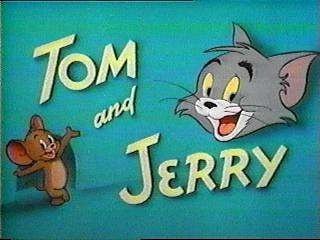
Tom-Tomming about Tom & Making Merry with Jerry!


This post is quite late in making it to my Blog. What a shame. It ought to have gone up on Sunday or at least on Monday last. Well, okay, better late than never as they say – I watched the Pogo amazing kids awards on Dec 11th and relished it thoroughly. One of the highlights of the show was that the Best Toon award went to…………tan dan tan dan dan tan dan taaannnnn (substitute for drum beats)– Tom & Jerry! Boy! Did I celebrate! :)

….And watching children reach and exhibit their God-given potential brings silent (they don’t announce their arrival) tears of joy to my eyes. It dawns upon me that there are perhaps very few things that are more awe-inspiring to me than watching gifted children……

How to Save the World

Who art thou, O, blogger?

Category: Impulsive post


A blogger is not necessarily one who is only bursting to tell the world what she thinks. She could be one who just loves to think aloud and does not unfortunately have an alter ego a la Calvin who has Hobbes. She could be one with a natural flair for writing, someone who loves language and literature and is waiting to enrobe her thoughts, opinions, feelings, and encounters in words. It could be someone who just wants to communicate to her kith and kin across the world what she is going through on a daily basis and at one shot. She could be someone who just wants to join the blogging bandwagon and give the whole thing a shot….in which case it would typically be a short shot or in other words a shot short. Thee hee. :)


Hey, talking of blogging, will some one tell me how one gets to show smileys on blogger? And covering some more ground on blogging, Google ought to introduce tagging on blogger apart from smileys, bullets etc. I won’t settle for Google being the laggard in anything they do and nor would, I am sure, any other Blogger user. :)

Blink-Some Points

Category: Post for personal use

Blink – Summary for reference

·         Intuition is something that we mostly cannot immediately articulate

·         What if we stopped scanning the horizon with our binoculars and began instead examining our own decision making and behaviour through the most powerful of microscopes

·         Thin-slicing – ability of our unconscious to find patterns in situations and behaviour on very narrow slices of experience

·         Free will is largely an illusion: much of the time, we are simply operating on automatic pilot, and the way we think and act – and how well we think and act on the spur of the moment – are a lot more susceptible to outside influences than we realize

·         Allowing people to operate without having to explain themselves constantly turns out to be like the rule of agreement in improv. It enables rapid cognition

·         Decision making – truly successful decision making relies on a balance between deliberate and instinctive thinking. Second – in good decision making, frugality matters

Wednesday, December 14, 2005

Meditation - A Source of Wisdom

A Thought for the Day From Sri Eknath Easwaran

----------------------------------------------


Everyone sees the Unseen in proportion to the clarity of his heart, and that depends upon how much he has polished it.

Whoever has polished it more sees more -- more Unseen forms become manifest to him.  - Jalaluddin Rumi


As your meditation deepens, there will still be occasions when you get upset, but you will be able to watch what goes on in the lab of your mind.  It's like getting into a glass-bottomed boat, where you venture out onto the ocean and watch all the deep-sea creatures lurking beneath the surface: resentment sharks, stingrays of greed, scurrying schools of fear. You slowly gain a certain amount of detachment from your mind, by which you can observe what is going on, collect data, and then set things right.


Some of the chronic problems that millions of people suffer from today might be solved by gaining a little detachment from their minds and emotions, so they can stand back a little when the mind is agitated and see the ways in which it makes mountains out of molehills. Many problems simply are not real; they start to seem real only when we dwell on them. The thorniest problems to solve are those that are not real; yet most of us go on giving them our best efforts.


-----

>From Eknath Easwaran, "Words to Live By" (Nilgiri Press, 1997)

Counter-Intuitive Ideas...

Here are some of the counter-intuitive ideas that have crossed my mind/path of late.

Wonder how many more such ideas are doing the rounds. It would be interesting to know

-          Another thought that has passed my mind is the perils of being a pioneer and taking initiative. The pioneer suffers the losses and endures the mistakes and difficulties of going through uncharted territory while the immediate followers learn from his mistakes and challenges he faces and they themselves go through a smoother journey with a lot fewer obstacles

-          MIT Sloan Review talks about the hazards of getting too close to the customer as opposed to the conventional wisdom of considering the customer to be the king and co-creating the future with the customer. The hazards of getting too close to the customer being spiraling expectations and thereafter difficulties in expectations management. (Isn’t this actually evident? We expect a lot more understanding and support and love etc from our immediate family and best friends and are not ready to forgive them when they don’t ‘deliver’ as against people that are just acquaintances!)  

Monday, December 12, 2005

RTaking Your Concept to Market

Ref

TRansition from TRaffic to TeRrific?

By now, I am certain beyond any doubt that a lot must have been said about the traffic in Bangalore not just in newspaper and magazine articles but also in a number of blogs. I myself have written about it a few times and have pondered over it many more times than I’ve spoken about it. What could be the possible solutions to the problem that this city faces? What are the traffic police doing about it? Aren’t they thinking of solutions that the public is thinking of? Or are they not able to implement their ideas? Questions to which I don’t know the answers for sure. But these are possible solutions that I can think of:

·         traffic police should set up a committee of devoted and sincere members from a cross-section of the society and brainstorm it out

·         traffic police should learn from other cities across the world that found themselves in similar situations

·         traffic police should influence Corporates to bring in some changes in the corporate world that helps overcome some of the problems – like options to work from home, work shifts, placement of teams in same offices to avoid inter-office shuttling,

·         creation of traffic police blogs to instruct, communicate, inform, and advice the public

·         traffic police to search the minds of general public (and blogs) for possible ideas, problems

·         in-depth traffic analysis using intelligent software and recommendations based on type of traffic, routes adopted, peak hour traffic, restrictions on certain vehicles, etc

·         administrative initiatives like better city planning, expansion and migration assistance in case of high severity  

·         utilization of tools to promote innovative and creative solutions that may even seem absurd. Residential quarters for office goers near office; mini-flights from central areas to electronics-city, ITPL, Peenya etc,   

·         during execution/implementation of solutions – prioritization of solutions to implement the top 3 to achieve quick wins 

The thought of a Blog from the traffic police sounds exciting to me. It would be one way to keep Bangaloreans happy as it would eliminate problems of transparency and communication gaps and even invite comments, feedback, ideas etc from the public. 

Extending the thinking a little, it would be cool to see government and ministry-based blogs that tell all thereby capturing knowledge for ever so as to sustain initiatives irrespective of which party is at the helm. Of course, this is assuming that political parties are serious about their responsibilities.  

--------------------------------------------------------------------------------------------------------------------------------------------------------------------------------

I just finished writing up this post and caught up with the daily news and was pleasantly surprised to read this piece of news: Instant gratification!

DAKSHINA KANNADA DISTRICT POLICE LAUNCHES WEB LOG 

The Hindu Business Line 

In keeping with the policy of the Karnataka Government to implement e-governance in the day-to-day administration to the maximum extent, the Dakshina Kannada District Police launched its official Web log (blog) on Thursday.  Addressing presspersons after launching the blog, B. Dayananda, Superintendent of Police, Dakshina Kannada, said important matters relating to the district police would be regularly posted on the blog.  All can easily access this. With this, authentic and official information of the department can be given to the press and the people swiftly.  He claimed that the innovative idea of launching a blog is the first of its kind in the State. The high penetration of Internet in the district has helped the department to host this blog. 

Warning - Rambling at its best!(Why do you think I love blogging?)

I was introspecting on the fact that in KM circles Trust is always spoken about as a pre-requisite for KM to be sustained. It is an absolutely essential ingredient for KM because the foundational behaviours of KM like knowledge sharing, mentoring, collaboration, questioning, seeking expert advice etc will not work unless it is built on a foundation** of mutual trust. That’s obvious, isn’t it? No one is going to challenge the logic. But let’s look at what happens in practice. Do we live in an ideal world where everyone trusts everyone else? Of course, not! Leave alone the intentions of people being suspect, even amongst those who harbour only positive intentions, trusting doesn’t come easy because to be able to trust people, you need to understand them very well and have faith in them and that’s extremely difficult as everyone is unique and views the world through her personal filter that isn’t visible to most others. Moreover, even if one were to understand others due to a long association, trusting someone who has a different approach to life is not easy. How will a straight-thinking person for example trust someone who is the calculating type? How will an ambitious person trust a conservative, careful and cautious person? How will a relationship-centric person trust a task-centric person?

One of the most critical requirements according to me would therefore be the need for everyone to first learn to respect each other and their contribution and be open to consider their worth despite differences in beliefs and values. In addition, one needs to be big-hearted enough to put aside negative qualities in others (for no one is perfect) and difference of opinions. There can never be an environment of complete trust, for even differentiating between the genuine and the fictitious is not easy to most people. Everything is first looked at with a suspecting eye in this world full of selfishness, hatred, greed, anger, jealousy, corruption, etc. Therefore, even before one can trust another it is necessary to learn to respect each other despite such negative qualities for everyone has her weaknesses. The idea ought to be to improve ourselves, get to be a better human being, learn from others, teach others by example, respect each other, leverage on the strengths and positives of each other and slowly but steadily convert the relationship into a positively synergistic one. **In the process of building such a relationship (be it a family, team, organization etc) respect ought to be used as the bricks and trust as the cement that takes its time to hold the bricks together but once set, is not easily shaken. So, in the analogy to the building industry, trust may not really be the foundation itself but the cementing force that is built on a foundation of bricks of respect.

Well, to conclude, it’s not just in KM but everywhere else too - respect for each other can be the panacea for many problems that the world faces today. It is not easy but as many religious philosophies point out, if one succeeds in firmly believing that every living being is a form of God and has an infinite potential to be ‘good’, anything is possible. Like in management philosophy, respecting someone and reposing complete faith in the person is perhaps the only sustainable method to work wonders in the long-run if not in the short-run. KM is indeed rooted in philosophy and human nature more than anything else.  

Note: If one were to believe that only those who have mastered something ought to advice others on the same, this post needs to be trashed. I myself am making a conscious effort to first respect and understand others. I’ve got to admit that I still have a long way to go…respecting people who clearly have the character/intellect/talent/charisma etc is very easy, but it is difficult to respect people who are generally obnoxious/don’t make an effort to understand others/trample over others etc! (I don’t even want to list the different negative characters that I can’t stand…feels allergic :-))

Friday, December 09, 2005

The Value of Human Values. Where Does it Belong?

Still on the MBTI personality analyzer test, there are two kinds of people when it comes to dealing with people/situations – Thinking and Feeling. The thinking people go by certain principles/values which they don’t change irrespective of the ‘special’ people-oriented needs of the situation. The Feeling people on the other hand may possibly compromise on principles/values at times to make way for human needs. The Feeling people would typically put relationships and the benefit of human beings involved above everything else while the Thinking people don’t consider whether the people concerned would feel sad/bad/angry etc if at all it boils down to choosing between a principle and a person. If you hear that someone was fired to save the company some badly needed money, it would have almost surely come from a Thinking person rather than a Feeling person.

Warning: This portion of the post may not make any sense to you whatsoever unless you happen to be tuned into the same frequency as I – which is In234sane MHz. I am not to be held responsible for possible brain transplant recommendations from your family doctor after reading this post. Over to my analysis…

It was in this context that I was trying to place ‘Human Values’ somewhere on the line between the two types. Now, the distinctiveness of this term is that it is paradoxical in the current context of our Thinking-Feeling discussion. This is how. While the word Human is something the Feeling people can relate to, Values is associated with the Thinking people! Our first reaction would actually be to place it (Human Values) as a value on the list of a Thinking person. But the interesting thing about it is that it will be a default value even in the list of a Feeling person! I don’t think it is appropriate to say that a Feelings person doesn’t operate on values. She does. But the value that overrides all other values on her list is the Human Values value! Thus, Human Values as a value seems to be a perfect meeting point for both the kinds of people – Thinking and Feeling – to me. What? But for all this analysis, I’d say Human Values is a fast disappearing Value in this money-crazy world. Enough of the wild rambling you say?  Okay. Advice taken.  

Wednesday, December 07, 2005

Paradox Thinking Once More...!

It just struck me that had one of the characters in a favourite (for its morals and touching narration) story of mine (loaded with emotion and pathos) adopted Paradox thinking a precious life could have been saved! The story of course wouldn’t have been as effective as it is now, without the change that I suggest. Nevertheless, here’s what occurred to me.

The story is one that many in India may be familiar with; the story of the Mongoose and the Child. For the benefit of those who are not aware of the story, here’s a quick narration. There may be many versions of the story, but here’s the one I remember. There lives a childless couple in a village in India. One day, the husband finds a mongoose kid and brings it home and the couple takes good care of it and showers it with love and affection. Soon, the couple’s sorrow of not having a child is taken care of by providence and they are blessed with a child. The couple in fact believes that it was the mongoose that brought them good luck and continues to take care of the mongoose as one among their family. The mongoose in turn is very loyal and loving to the family. One day, it so happens that the wife has to go out to fetch water from a far away place and thinks about whether it would be safe to leave the child with the mongoose while she is away. She finally decides that there is no harm in doing so and goes off, trusting the mongoose to guard her child. In her absence, a snake crawls into the house and is headed toward the child’s cradle when the mongoose risks his life and fights the snake and succeeds in killing it as well. Having done a great job of saving the child, the mongoose triumphantly marches out to meet the returning mother of the child. On seeing the mongoose with blood dripping from its mouth, the woman is shocked and immediately concludes that the mongoose has killed her child and drops the pot of water on the mongoose thus killing it (Unbearable this scene). She runs in with a scream only to find a smiling child and a dead snake nearby. She runs back to the mongoose but it’s too late; the damage has been done. (I feel a huge lump in my throat and tears welling up in my eyes even though this story is an old and oft-encountered one for me). Well, the moral of the story is clear –

1) Do not jump to conclusions/ Look before you leap…

2) Trust your loved ones

It just occurred to me that there could be another moral to it – 3) Adopt paradox thinking. It may or may not turn out to useful (lead to the truth), but the very act of entertaining paradox thinking can help! It can help overcome difficult situations even if it doesn’t eventually lead to the truth. The woman in our story killed the mongoose because she thought it had harmed her child. Before letting go of her emotions in the form of the pot of death on the mongoose, if only she had thought for a moment and approached the situation from the opposite direction! If only she had adopted paradox thinking and entertained the thought that the blood dripping from the mongoose’s mouth was not her child’s – due to the mongoose KILLING her child - but that of another animal that the mongoose had killed to SAVE her child! And that was the not so obvious but bare and biting truth.

Going by this example and many more that I’ve read about and experienced myself, I am completely convinced that we could all do with a lot more conscious paradox thinking (in the positive direction) in everyday situations as well as difficult situations. Sometimes, we may be very much right in what we think but despite that, entertaining paradox thinking may make the situation a lot easier to handle and keep us from doing anything impulsive or foolish. If someone says something that hurts us we may choose to think for a moment that they were perhaps only trying to make us feel better! When we face a situation that we initially think will kill us we may choose to believe that it will only make us better people! When we feel our body temperature going up we may choose to remember that our body is fighting the germs successfully rather than worry about the fever! When we fail to open a door after repeatedly trying to push it, we may choose to try pulling it! :-))) When we find ourselves hating someone for making life miserable we may choose to start loving them for building character! Paradox thinking can be wonderful. Paradox thinking can be fun and lead to creativity. Paradox thinking can even change one’s approach to life. It can thus, be, most importantly, worth it.

Inspiration: The Paradox Process by Derm Barrett

Also check out - http://enchantedmind.com/html/creativity/techniques/paradox.html

I’ll also try and link all my other posts on paradox thinking, in the next few days…

The Earth's Learning Curve

I like this article a loooot and not just because it speaks about knowledge sharing between countries. :-)

The final paragraph is wonderfully written...

But knowledge is not the same thing as wisdom. Knowledge can produce equally powerful ways to destroy life, intentionally and unintentionally. It can produce hate and seek destruction. Knowledge does not by itself bring any answer to the ancient Greek question "What is a Good Life?" It does not produce good sense, courage, generosity and tolerance. And most crucially, it does not produce the farsightedness that will allow us all to live together—and grow together—on this world without causing war, chaos and catastrophe. For that we need wisdom.

Google: Ten Golden Rules

Long-term thinking wins.

PS: Thanks to my friend for pointing out this article...

Tuesday, December 06, 2005

:-) So Cute!

I can't understand why people are frightened of new ideas. I'm frightened of the old ones. - John Cage

Catching up....

I did one of my favourite things today, after a longish gap - Browsing through magazines from the world’s top management schools. Browsed through HBR and MIT Sloan Review. Got some food for thought as expected.


§         Jonathan Schwartz (Sun Microsystems) says in an article on executive blogging that “having a blog will not be a matter of choice for business executives anymore than using email is today” in the November 05 edition of HBR.  

§         An article on innovation vs. complexity indicates that organizations need to balance the two to achieve maximum revenue as well as profits. Not that I see too many organizations focusing on innovation and taking a hit on the revenues. Well, long-term implications will obviously have to be given due-consideration. Short-term balancing will not work. I am yet to read the article….may have more thoughts once I read the article. Can’t help observing that the world’s thinking definitely goes around in circles. Efficiency –> innovation –> efficiency.

§         HBR has a small column on business models. Hilariously written I must add. :)

§         MIT Sloan Review has a series of articles on how one ought not to get *too* close to the customer as things like expectation management might then become too hot and difficult to handle. I can relate to that. ;) But I’d like to ask…hey, do you have a choice if you want to survive in this cut-throat world, leave alone get to the top?   


If you happen to read these interesting articles, please leave your comments here. Toodle-oo then!

Monday, December 05, 2005

Common Sense = Sensing or Intuitive?

If you’re familiar with the MBTI you’ll know that people can be of two types when it comes to interpreting the world - Sensing and Intuitive. The ‘Sensing’ people are those who see things that are seeable if you get my drift. :-) They use their eyes, ears, hands, nose, and mouth to interpret the world – through activities like seeing (physical objects/incidents etc), hearing, touching, smelling, and tasting. They are the observant types and have an eye (and a couple of ears and hands and a mouth and a nose.) for the details. They would be good people to go to when one needs directions, details, etc. In other words someone you should conceivably rely on if you wanted to go exploring a thick jungle and have plans of returning home. One would imagine that they are the earthy – practical – types; the ones who are commonsensical** and stick to what the world has to show and are inclined toward hard core tangible facts as it were. On the other hand, the ‘Intuitive’ people are those who can’t probably see what’s happening right under their nose and couldn’t care less about the details.  They more often than not ignore the things that stare them on their face and look for something that’s beyond the obvious and visible. The imaginative types. The ones you should perhaps rely on when trying to explore something befuddling/strange/weird and apparently impossible. :)


Okay. Here’s where I put forth my theory.


 **Common Sense: This oft used term - says the dictionary - means Sound judgment not based on specialized knowledge; native good judgment. I think the emphasis here is on two words - ‘not’ and ‘judgment’.  Our natural tendency going by the classification of types of people above would be to believe that the type with common sense is the ‘Sensing’ type rather than the ‘Intuitive’ type. Why? Because the Sensing people are considered to be practical and alert (active senses). But I have a different proposition here. I’ve drawn the opposite conclusion in fact. Why? I’ve combined and connected two concepts - the attributes of the Sensing people and the Hindu philosophy of the world being Maya (Illusion/Delusion). Here’s how I would explain it - Sensing people rely primarily on the five senses. The five senses function based only on what is seen/heard/smelt etc. It is based on what is perceived to be happening in the world. BUT as per Hindu philosophy, the world is Maya. Which means that the world is an illusion. What you see happening is not the truth. It is a put on. (And we all know anyways, that nothing that happens in the world can be assumed to be true on the face of it. There are too many things happening behind the scenes. And like Shakespeare said “the world is a stage and we are all actors in it”. We don’t say what we really mean; we don’t many a time mean what we do and so forth. In a world where many people lead lives centered on money, fame, and power, and more fundamentally to survive in this world, not everything that is projected is honest and true. Nothing has escaped contamination though in varying degrees – be it politics, journalism, business, and even religion.) So, what does this imply? Anyone who draws conclusions based on just what she sees in the world may more often than not be way off target. When something is way off target, it obviously cannot be ‘common sense’ in the real sense– that is, something that leads to sound judgment (does that make sense? ;)). It will take someone who can see beyond what is visible to the naked eye to understand what the reality/truth is. In other words, this may be a job best left to the Intuitive type rather than the Sensing type!!! I rest my case here.


Here’s a fascinating and associated thought process that I went through while dwelling on this topic. What type do you think Sherlock Holmes was? Or for that matter any of the real-life detectives? Do they have to be the Sensing type or the Intuitive type? Think about it. It doesn’t at least to me seem easy to conclude that they ought to be one of the two types. I think it is essential for a detective to be both Sensing and Intuitive at the same time! If they were to take the MBTI they would fall in between the two categories. Isn’t that intriguing? A detective will obviously have to grab every clue available for which she needs to use all her senses. At the same time, a detective cannot rely only on clues. She will have to look beyond the obvious and see through the artificially projected picture. She will have to be Intuitive to find out possible motives and cut through fabricated aspects of the case! (No wonder many people (including me) find themselves admiring detectives and hooked on to detective stories) Can you think of any other profession that demands both these qualities?  

Thought for the Day

This one's extremely inspiring! Wow!


A Thought for the Day From Sri Eknath Easwaran

----------------------------------------------


If your heart were sincere and upright, every creature would be unto you a looking-glass of life and a book of holy doctrine.

 - Thomas a Kempis


The pure in spirit, who see God, see him here and now: in his handiwork, his hidden purpose, the wry humor of his creation. The Lord has left us love notes scattered extravagantly across creation. Hidden in the eye of the tiger, the wet muzzle of a calf, the delicacy of the violet, and the perfect curve of the elephant's tusk is a very personal, priceless message.


Watch the lamb in awkward play, butting against its mother's side. See the spider putting the final shimmering touches on an architectural wonder.  And absorb a truth that is wordless. The grace of a deer, the soaring freedom of a sparrow hawk in flight, the utter self-possession of an elephant crashing through the woods - in every one of these there is something of ourselves.


From the great whales to the tiniest of tree frogs in the Amazon basin, unity embraces us all. Lose sight of this unity, allow these creatures to be exploited or destroyed, and we are diminished too.


-----

>From Eknath Easwaran, "Words to Live By" (Nilgiri Press, 1997)

http://www.nilgiri.org/Html/Thoughts/today.html

Friday, December 02, 2005

Mission, Vision, Innovation, Learning....Are you Senging (singing+senge) the right song?

In perhaps what is one of the most inspiring articles I’ve ever read, “The Discipline of Innovation”, (Title: THE DISCIPLINE OF INNOVATION,  By: Senge, Peter M., Executive Excellence, 87562308, Jun99, Vol. 16, Issue 6) Peter Senge says:  

Note: Certain phrases and sentences have been highlighted by me and not by the author (Senge) of the article.   

“The dictionary--which, unlike the computer, is an essential leadership tool--contains multiple definitions of the word mission; the most appropriate here is "purpose, reason for being." Vision, by contrast, is "a picture or image of the future we seek to create," and values articulate how we intend to live as we pursue our mission. Paradoxically, if a mission is truly motivating, it is never really achieved. Mission provides an orientation, not a checklist. It defines a direction, not a destination. It tells the members why they are working together and how they intend to contribute. Without a sense of mission, people can't know why some intended results are more important than others.”

I don’t know if my memory serves me right, but I think in college we were told that Mission statements cater to short term objectives while the Vision is the more glamorous of the two and caters to the long-term objectives of the organization! Quite misleading, eh? Anyways, Senge goes on to say: 

To be mission-based, to be values-guided, is to hold up lofty standards against which every person's behavior can be judged. Moreover, mission is inherently abstract. It is so much easier to make decisions based on numbers, habits, and unexamined emotions. To be mission-based requires everyone to think continuously. But it can be done; and when done, it can work.

“Results-oriented leaders must have both a mission and a vision. Results mean little without purpose, for a very practical and powerful reason: a mission instills both the passion and the patience for the long journey. While vision inspires passion, many failed ventures are characterized by passion without patience.”

“Clarity about mission and vision is both an operational and a spiritual necessity. Mission provides a guiding star, a long-term purpose that allows you to balance the inevitable pressures between the short term and the long term. Vision translates mission into meaningful intended results--and guides the allocation of time, energy, and resources. It is only through a compelling vision that a deep sense of purpose comes alive. People's passions flow naturally into creating something that excites them. Taken together, mission and vision fill a deep need: all human beings have a purpose, a reason for being. Most of us believe that there is something more important than what you can buy, acquire, or market. The passion at the heart of every great undertaking comes from the deep longing to make a difference, to have an impact. It comes from what you contribute rather than from what you get.”

Now, these ideas are radical statements in today's society. The return-on-investment orientation--the view that people go to work primarily for material gain--is the bedrock of our beliefs about people in contemporary society. Thus the real discipline of innovation not only threatens established power relations, it runs counter to our cultural norms.

What profound statements! Every one of them! I do firmly believe that many organizations have the vision but lack the mission and therefore cannot inspire their employees long enough to perform.

Just ask people if senior management really believes that people come to work every day, as Deming said, "seeking joy in work." That's intrinsic motivation. It's assumed by today's management to be in scarce supply. Joy in the work comes from being true to your purpose. It is the source of the passion, patience, and perseverance we need to thrive. People cannot, however, define results that relate to their deeper passions unless leaders cultivate an environment in which those passions can be safely articulated.

There can be nothing like intrinsic motivation. It’s the true doorway to happiness and fulfilment. Incidentally, Dilbert, in a cartoon strip I read today, tells his boss who opines that Dilbert doesn’t need a raise but only a challenging job that he’d rather exchange his challenges for his boss’s money if the latter (the sentence is so badly framed that I need to tell you that I am referring to the boss here. And sorry for making the sentence even more complex with this remark) believed so much that challenges were what were required for satisfaction. ;). Hey, BTW, ironically, as you’ll see in the excerpt below, Senge goes on to point out the idealists turn cynics. Scott Adams – Do I see you nodding?   

Although there are some extraordinarily principled and value-driven organizations, the defining characteristic of far too many enterprises is cynicism. And cynicism comes from disappointment. As the saying goes, "Scratch the shell of any cynic and you'll find a frustrated idealist." Make speeches about upholding high ideals or contributing to a better world, and most people will roll their eyes. That reaction is the product of thwarted expectations, and it is the reason that so many organizations fail to innovate. They are afraid to let the genie--passionate purpose--out of the bottle. With good cause. Passion is a powerful force, but when frustrated, it is also dangerous.

I find it to be quite true that idealists turn cynics once they make a crash-landing into the so-called reality.

But often the most important act of executive leadership is the ability to ask a question that has not been asked before--the ability to inquire, not just dictate or advocate. Unfortunately, most leaders are great at advocacy but poor at inquiry.

That apart, here is another excerpt which I think is so important! To be able to inquire more than advocate! (Ahem! I think I have some lessons here…. :[] )

Many have talent, but real learning requires discipline, the process through which we draw out our potential through commitment, practice, passion, patience, and perseverance.

Yet another significant statement. Talent alone doesn’t provide the necessary fuel in the long run. It is learning that keeps the wheels running and it requires effort.

 Oops. Okay. I stop here for at this rate, I may end up reproducing the entire article here and I don’t own the copyrights ;-)!!

Wednesday, November 30, 2005

Is KM...only for some?

On hearing my lecture on KM, a colleague of mine expressed his opinion that KM is perhaps for family businesses who want to be eternal and companies that are *truly* visionary. Not for the ones with the short-term focus. Not for ones whose CEOs are there to make a quick buck and make as much headline news as possible and disappear into another money-making racket before you can say ‘hey, look there’.  I couldn’t help but laugh for he took the words outa my mouth. So, is KM too philosophical and ideal a subject to be tried in the corporate world? Even if it works, will it be only a modest success? Not necessarily. Awareness of such real-life limitations only means that one ought to adopt as pragmatic an approach as possible and look for the quick wins and small-chunks of work that can have a significant effect and later slowly pave the way for a snow-balling effect to create the ideal world that KM proposes. :-)    

Is Bangalore Innovative? No says Business Week Article....

What Bangalore Should Aim For

My Q - Does innovation have to necessarily be technological in nature?

Nucor Steel

This is a great opening page for a corporate website in my opinion. Do this kind of a thing in word and spirit and the company's reputation, ranking, revenues, profits, operational costs et al automatically change for the better. Keep the employees happy, respect them, trust them, value them, give them the ownership and the customers will automatically come flocking. Talk only about customers, ignore the employees altogether and the path to the corporate graveyard is surely being paved...

Monday, November 28, 2005

'STRANDed' amongst books...

I am getting too much into reporting conversations these days! But I can’t resist reporting conversations that make one think/laugh or smile/be better informed. Guess I happen to be in the ‘right’ place at the ‘right’ time and ‘am perhaps getting to learn to listen better too. ;-). Heard this at the Strand Book Fest in Bangalore. I traced the long and winding cash counter line back to its tail and finally located it and added a few inches to it (I don’t particularly want to mention exactly how much I measure in whatsoever direction. Hey, hold it….I am not a fatso, but yeah, I wouldn’t mind being a little thinner :)). The person ahead of me was holding a huge encyclopaedia on some topic related to medicine when his friend walked toward him and said “You can finish the book before you reach the counter. Start reading it now. You will not have to pay for it”. :D. A minute later, the same person picked up a small picturesque children’s book on the table beside him and started reading it out aloud and said “We could perhaps read out these stories to the children around and collect some money. Anyways, people have nowhere to run!” : D (It was an extremely crowded room).

About the books I bought, suffice it to say that I am sure there will be no cure for my Book-Buying OCD (Obsessive Compulsive Disorder) even in that encyclopaedia I refer to in the previous paragraph. I bought 8 books - Management, Technology, Classics, Humour, and Comics. Don’t ask me where I’ve put them. Anyways, I’ll tell you. :O I managed to find some space in and around my poor book-shelf that would’ve long died of Asthma or a similar respiratory disease if it were a human being.

Friday, November 25, 2005

The Art and Science of Conscience

The Art and Science of Conscience

Did you know that exercising your Conscience implies that you are accessing your right brain (source: Stephen Covey’s Seven Habits of H.E.P)? I didn’t. It was an eye-opener for me. I had always thought that using the Conscience was a logical thinking exercise – a process of deciding between two or more things/choices (which one is right and which one wrong, whether to do something/not to do it, and so on and so forth). But no, I was apparently wrong. Conscience application is related to one’s creative abilities! In retrospect, it does appear to me that it ought to be so because exercising the Conscience involves factoring in the context, the people concerned, relationships, the unique circumstances associated with the decision to be taken etc. And more importantly perhaps, the conscience can be exercised to arrive at a creative solution that moves away from just the default options offered by the situation!

'Sound' Friendship

Short Story:

Megha was energized. It would be the first time that she would be getting to attend an international conference were her paper to be selected. She was looking forward eagerly to the experience and learning. The news arrived. Her paper had been selected. Her company now had to approve her travel. After a few days, she heard that her travel had been approved as well. On receiving the news, she went into the conference room where she was to work on something with two of her colleagues, one of whom she considered to be a nice human being and a friend. She went in and mentioned that her travel had been approved, with a slight smile. The ‘friend’ narrowed her eyes and put on an expression that almost looked like a half frown and half smile and said “How come?!” At that moment, gravity worked overtime as if it wanted to delight Newton beyond his expectations. A lot of things fell simultaneously with one huge resounding thud. One of the things that fell was, paradoxically, a resounding silence in Megha's heart. Between the thud and the silence, she had heard the message – loud and clear.

Thursday, November 24, 2005

A CHI-nese Attitude!

A conversation that I heard on one of the programmes in Discovery Travel and Living struck a nice-sounding chord within me. The programme – <an adjective like ‘amazing’ or something to that effect> Vacation Homes. One of the places featured was a beautiful vacation home built on a huge mound of rock in a golf-course overlooking beautiful mountains, trees and a big river – overall, a dazzling scene.  The person who owns the house is a Chinese - An energetic, vibrant, cheerful, naughty *OLD* man. :) The programme anchor met up with this remarkable man and took the viewers on a house tour along with the former and in the process they spoke about something interesting – ChiChi is Chinese for Energy! The owner (I unfortunately did not catch the name of this man) went on to explain that the house was designed and built around the concepts of natural energy. For example, the open spaces for relaxing/reading/reclining were facing the direction in which natural energy would supposedly ‘come in’. Hmmm. Interesting! I was completely taken in by the concept because the behaviour of the owner suggested that he had absolutely no shortage of ‘energy’ whatsoever. His attitude was infectious. The anchor, obviously impressed by what he saw, finally asked him “What did you tell your architect that your neighbours should say when they saw your house?”  And the old man paused for a second or two, looked away from the anchor and said with what seemed like a tolerant smile “I don’t think like that. This is what I wanted…………..my way. What others think is another thing!” To which the anchor quickly recovered and said “Ya, that’s the way it should be”  


The next scene showed the old man admiring the scene from one of his balconies and telling the anchor “This is God’s painting! Such a beautiful painting! No one can paint like this.....such a huge painting.” Another thing that got me in the same programme was when the anchor asked the old man’s wife as to what kind of a role she had to play in this dream of his, she said “I asked him what he was going to do with a rock and how he would build a house on a huge piece of rock when he told me about buying this area and he simply said “just you wait and see!””.  :)


Remarkable man with a great mix of qualities – determination, connoisseurship, self-confidence, enthusiasm, and full of life! :-) And, three cheers to God, the master painter…!!


Wednesday, November 23, 2005

Something I've been looking for!

How to Save the World

One more book to be bought? ;)

Putting the Fun in Funerals

Goes a long way to show that life (or should i say death? ;-)) is full of opportunities provided we are ready to consider new ideas, experiment, have faith and enjoy ourselves in whatever we do...

There is so much one can do! I wonder why we crib about losing something or not getting what we 'want'. We can always get what we want. The means may be different. Only thing that we need to be concerned about/focus on is that the - our - purpose is served...and the - our - values retained...

The Man Who Invented Management

The Man Who Invented Management: "It was around this time that Drucker heard Schumpeter, then at Harvard University, say: 'I know that it is not enough to be remembered for books and theories. One does not make a difference unless it is a difference in people's lives.'"

-------------------

What a profound value!

The Man Who Invented Management

The Man Who Invented Management: "Drucker narrowed his eyes thoughtfully. 'I learn only through listening,' he said, pausing, 'to myself.'"