Friday, December 02, 2005

Mission, Vision, Innovation, Learning....Are you Senging (singing+senge) the right song?

In perhaps what is one of the most inspiring articles I’ve ever read, “The Discipline of Innovation”, (Title: THE DISCIPLINE OF INNOVATION,  By: Senge, Peter M., Executive Excellence, 87562308, Jun99, Vol. 16, Issue 6) Peter Senge says:  

Note: Certain phrases and sentences have been highlighted by me and not by the author (Senge) of the article.   

“The dictionary--which, unlike the computer, is an essential leadership tool--contains multiple definitions of the word mission; the most appropriate here is "purpose, reason for being." Vision, by contrast, is "a picture or image of the future we seek to create," and values articulate how we intend to live as we pursue our mission. Paradoxically, if a mission is truly motivating, it is never really achieved. Mission provides an orientation, not a checklist. It defines a direction, not a destination. It tells the members why they are working together and how they intend to contribute. Without a sense of mission, people can't know why some intended results are more important than others.”

I don’t know if my memory serves me right, but I think in college we were told that Mission statements cater to short term objectives while the Vision is the more glamorous of the two and caters to the long-term objectives of the organization! Quite misleading, eh? Anyways, Senge goes on to say: 

To be mission-based, to be values-guided, is to hold up lofty standards against which every person's behavior can be judged. Moreover, mission is inherently abstract. It is so much easier to make decisions based on numbers, habits, and unexamined emotions. To be mission-based requires everyone to think continuously. But it can be done; and when done, it can work.

“Results-oriented leaders must have both a mission and a vision. Results mean little without purpose, for a very practical and powerful reason: a mission instills both the passion and the patience for the long journey. While vision inspires passion, many failed ventures are characterized by passion without patience.”

“Clarity about mission and vision is both an operational and a spiritual necessity. Mission provides a guiding star, a long-term purpose that allows you to balance the inevitable pressures between the short term and the long term. Vision translates mission into meaningful intended results--and guides the allocation of time, energy, and resources. It is only through a compelling vision that a deep sense of purpose comes alive. People's passions flow naturally into creating something that excites them. Taken together, mission and vision fill a deep need: all human beings have a purpose, a reason for being. Most of us believe that there is something more important than what you can buy, acquire, or market. The passion at the heart of every great undertaking comes from the deep longing to make a difference, to have an impact. It comes from what you contribute rather than from what you get.”

Now, these ideas are radical statements in today's society. The return-on-investment orientation--the view that people go to work primarily for material gain--is the bedrock of our beliefs about people in contemporary society. Thus the real discipline of innovation not only threatens established power relations, it runs counter to our cultural norms.

What profound statements! Every one of them! I do firmly believe that many organizations have the vision but lack the mission and therefore cannot inspire their employees long enough to perform.

Just ask people if senior management really believes that people come to work every day, as Deming said, "seeking joy in work." That's intrinsic motivation. It's assumed by today's management to be in scarce supply. Joy in the work comes from being true to your purpose. It is the source of the passion, patience, and perseverance we need to thrive. People cannot, however, define results that relate to their deeper passions unless leaders cultivate an environment in which those passions can be safely articulated.

There can be nothing like intrinsic motivation. It’s the true doorway to happiness and fulfilment. Incidentally, Dilbert, in a cartoon strip I read today, tells his boss who opines that Dilbert doesn’t need a raise but only a challenging job that he’d rather exchange his challenges for his boss’s money if the latter (the sentence is so badly framed that I need to tell you that I am referring to the boss here. And sorry for making the sentence even more complex with this remark) believed so much that challenges were what were required for satisfaction. ;). Hey, BTW, ironically, as you’ll see in the excerpt below, Senge goes on to point out the idealists turn cynics. Scott Adams – Do I see you nodding?   

Although there are some extraordinarily principled and value-driven organizations, the defining characteristic of far too many enterprises is cynicism. And cynicism comes from disappointment. As the saying goes, "Scratch the shell of any cynic and you'll find a frustrated idealist." Make speeches about upholding high ideals or contributing to a better world, and most people will roll their eyes. That reaction is the product of thwarted expectations, and it is the reason that so many organizations fail to innovate. They are afraid to let the genie--passionate purpose--out of the bottle. With good cause. Passion is a powerful force, but when frustrated, it is also dangerous.

I find it to be quite true that idealists turn cynics once they make a crash-landing into the so-called reality.

But often the most important act of executive leadership is the ability to ask a question that has not been asked before--the ability to inquire, not just dictate or advocate. Unfortunately, most leaders are great at advocacy but poor at inquiry.

That apart, here is another excerpt which I think is so important! To be able to inquire more than advocate! (Ahem! I think I have some lessons here…. :[] )

Many have talent, but real learning requires discipline, the process through which we draw out our potential through commitment, practice, passion, patience, and perseverance.

Yet another significant statement. Talent alone doesn’t provide the necessary fuel in the long run. It is learning that keeps the wheels running and it requires effort.

 Oops. Okay. I stop here for at this rate, I may end up reproducing the entire article here and I don’t own the copyrights ;-)!!

Wednesday, November 30, 2005

Is KM...only for some?

On hearing my lecture on KM, a colleague of mine expressed his opinion that KM is perhaps for family businesses who want to be eternal and companies that are *truly* visionary. Not for the ones with the short-term focus. Not for ones whose CEOs are there to make a quick buck and make as much headline news as possible and disappear into another money-making racket before you can say ‘hey, look there’.  I couldn’t help but laugh for he took the words outa my mouth. So, is KM too philosophical and ideal a subject to be tried in the corporate world? Even if it works, will it be only a modest success? Not necessarily. Awareness of such real-life limitations only means that one ought to adopt as pragmatic an approach as possible and look for the quick wins and small-chunks of work that can have a significant effect and later slowly pave the way for a snow-balling effect to create the ideal world that KM proposes. :-)    

Is Bangalore Innovative? No says Business Week Article....

What Bangalore Should Aim For

My Q - Does innovation have to necessarily be technological in nature?

Nucor Steel

This is a great opening page for a corporate website in my opinion. Do this kind of a thing in word and spirit and the company's reputation, ranking, revenues, profits, operational costs et al automatically change for the better. Keep the employees happy, respect them, trust them, value them, give them the ownership and the customers will automatically come flocking. Talk only about customers, ignore the employees altogether and the path to the corporate graveyard is surely being paved...

Monday, November 28, 2005

'STRANDed' amongst books...

I am getting too much into reporting conversations these days! But I can’t resist reporting conversations that make one think/laugh or smile/be better informed. Guess I happen to be in the ‘right’ place at the ‘right’ time and ‘am perhaps getting to learn to listen better too. ;-). Heard this at the Strand Book Fest in Bangalore. I traced the long and winding cash counter line back to its tail and finally located it and added a few inches to it (I don’t particularly want to mention exactly how much I measure in whatsoever direction. Hey, hold it….I am not a fatso, but yeah, I wouldn’t mind being a little thinner :)). The person ahead of me was holding a huge encyclopaedia on some topic related to medicine when his friend walked toward him and said “You can finish the book before you reach the counter. Start reading it now. You will not have to pay for it”. :D. A minute later, the same person picked up a small picturesque children’s book on the table beside him and started reading it out aloud and said “We could perhaps read out these stories to the children around and collect some money. Anyways, people have nowhere to run!” : D (It was an extremely crowded room).

About the books I bought, suffice it to say that I am sure there will be no cure for my Book-Buying OCD (Obsessive Compulsive Disorder) even in that encyclopaedia I refer to in the previous paragraph. I bought 8 books - Management, Technology, Classics, Humour, and Comics. Don’t ask me where I’ve put them. Anyways, I’ll tell you. :O I managed to find some space in and around my poor book-shelf that would’ve long died of Asthma or a similar respiratory disease if it were a human being.

Friday, November 25, 2005

The Art and Science of Conscience

The Art and Science of Conscience

Did you know that exercising your Conscience implies that you are accessing your right brain (source: Stephen Covey’s Seven Habits of H.E.P)? I didn’t. It was an eye-opener for me. I had always thought that using the Conscience was a logical thinking exercise – a process of deciding between two or more things/choices (which one is right and which one wrong, whether to do something/not to do it, and so on and so forth). But no, I was apparently wrong. Conscience application is related to one’s creative abilities! In retrospect, it does appear to me that it ought to be so because exercising the Conscience involves factoring in the context, the people concerned, relationships, the unique circumstances associated with the decision to be taken etc. And more importantly perhaps, the conscience can be exercised to arrive at a creative solution that moves away from just the default options offered by the situation!

'Sound' Friendship

Short Story:

Megha was energized. It would be the first time that she would be getting to attend an international conference were her paper to be selected. She was looking forward eagerly to the experience and learning. The news arrived. Her paper had been selected. Her company now had to approve her travel. After a few days, she heard that her travel had been approved as well. On receiving the news, she went into the conference room where she was to work on something with two of her colleagues, one of whom she considered to be a nice human being and a friend. She went in and mentioned that her travel had been approved, with a slight smile. The ‘friend’ narrowed her eyes and put on an expression that almost looked like a half frown and half smile and said “How come?!” At that moment, gravity worked overtime as if it wanted to delight Newton beyond his expectations. A lot of things fell simultaneously with one huge resounding thud. One of the things that fell was, paradoxically, a resounding silence in Megha's heart. Between the thud and the silence, she had heard the message – loud and clear.

Thursday, November 24, 2005

A CHI-nese Attitude!

A conversation that I heard on one of the programmes in Discovery Travel and Living struck a nice-sounding chord within me. The programme – <an adjective like ‘amazing’ or something to that effect> Vacation Homes. One of the places featured was a beautiful vacation home built on a huge mound of rock in a golf-course overlooking beautiful mountains, trees and a big river – overall, a dazzling scene.  The person who owns the house is a Chinese - An energetic, vibrant, cheerful, naughty *OLD* man. :) The programme anchor met up with this remarkable man and took the viewers on a house tour along with the former and in the process they spoke about something interesting – ChiChi is Chinese for Energy! The owner (I unfortunately did not catch the name of this man) went on to explain that the house was designed and built around the concepts of natural energy. For example, the open spaces for relaxing/reading/reclining were facing the direction in which natural energy would supposedly ‘come in’. Hmmm. Interesting! I was completely taken in by the concept because the behaviour of the owner suggested that he had absolutely no shortage of ‘energy’ whatsoever. His attitude was infectious. The anchor, obviously impressed by what he saw, finally asked him “What did you tell your architect that your neighbours should say when they saw your house?”  And the old man paused for a second or two, looked away from the anchor and said with what seemed like a tolerant smile “I don’t think like that. This is what I wanted…………..my way. What others think is another thing!” To which the anchor quickly recovered and said “Ya, that’s the way it should be”  


The next scene showed the old man admiring the scene from one of his balconies and telling the anchor “This is God’s painting! Such a beautiful painting! No one can paint like this.....such a huge painting.” Another thing that got me in the same programme was when the anchor asked the old man’s wife as to what kind of a role she had to play in this dream of his, she said “I asked him what he was going to do with a rock and how he would build a house on a huge piece of rock when he told me about buying this area and he simply said “just you wait and see!””.  :)


Remarkable man with a great mix of qualities – determination, connoisseurship, self-confidence, enthusiasm, and full of life! :-) And, three cheers to God, the master painter…!!


Wednesday, November 23, 2005

Something I've been looking for!

How to Save the World

One more book to be bought? ;)

Putting the Fun in Funerals

Goes a long way to show that life (or should i say death? ;-)) is full of opportunities provided we are ready to consider new ideas, experiment, have faith and enjoy ourselves in whatever we do...

There is so much one can do! I wonder why we crib about losing something or not getting what we 'want'. We can always get what we want. The means may be different. Only thing that we need to be concerned about/focus on is that the - our - purpose is served...and the - our - values retained...

The Man Who Invented Management

The Man Who Invented Management: "It was around this time that Drucker heard Schumpeter, then at Harvard University, say: 'I know that it is not enough to be remembered for books and theories. One does not make a difference unless it is a difference in people's lives.'"

-------------------

What a profound value!

The Man Who Invented Management

The Man Who Invented Management: "Drucker narrowed his eyes thoughtfully. 'I learn only through listening,' he said, pausing, 'to myself.'"

Monday, November 21, 2005

C(ool) D(eal)s on CDs

Touch wood! So far, today has been a day of some very important and amazing discoveries for me. I am sort of overwhelmed. It’s going to take me some time to come back to normal. :-). To add to that, I’ve changed the appearance of my screen completely and it makes me feel sort of good; as if I were in some other world, for the screen looks unique and out of the ordinary now – I’ve chosen the olive green windows theme and changed all the icon/title bar/tool tip fonts. Yippee. I love change. I really think my laptop looks cool (touch wood again) and pleasant now. But I don’t know how long it will be before I get bored with these settings…. ;) Sigh! Anyways, why think about that now? Let me bask in its glory for now…


Talking of discoveries, here’s one wonderful discovery I made yesterday which you’ll find to be very useful if you are into Indian movie/classical/instrumental music big-time and have your own unique tastes. If you are not aware of what I shall be talking about, the knowledge is going to leave you ecstatic, to say the least. I was listening to music at home and happened to open an old Suresh Wadkar (one of my favourite singers/voices) cassette after a long time. I rarely study the cover beyond the titles of the songs, but as I opened it yesterday it was a pure chance event that my eyes fell on a piece of information in the inside flap of the back-cover of the cassette. And I beamed so much that my facial muscles ached because this was what it was about – click here.


If you’ve seen the link, let me go on to add that it is of course obvious that you can always get your own CDs and tapes made at your local music shop, but I think this would a much easier process online for you may not have all this variety in one local shop. Not to forget, the likelihood of finding that very elusive old song which you’ve been looking for everywhere is very high on HMV! I am yet to order my CD. I need a lot of time to be able to fish out the songs that I don’t have but want to….! In case, you happen to make your own CDs using this service, don’t forget to leave your comments here.  

Personality Types

A useful link if you're aware of MBTI personality types...

Friday, November 18, 2005

The King (Raja) of Music


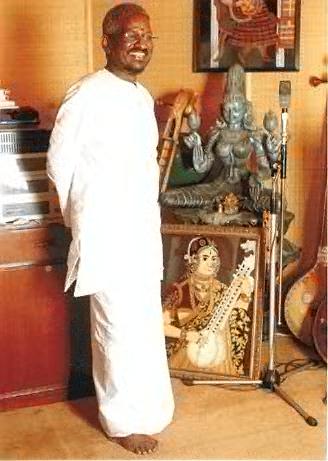
Hmm. This post ought not to have taken so long to show up; I wonder why it did not ‘emerge’ for so long! It’s taken me almost one and a half years to realize that I haven’t written a full-fledged post on...Ilaiyaraja & his Music, despite the fact that I am almost fanatical about his music. (I’ve made a passing mention of the fact that I am devoted to his music on my blog but never gotten into a complete write-up) Ilaiyaraja - Music. To me, these two are synonymous. In other (better) words, according to me, - Music, thy name is Ilaiyaraja. I was virtually fed on Raja’s music through my growing years and would have probably been subjected to severe mental and spiritual disabilities if not for his music. :) I adore the music that this man has composed and created. The tunes, the instrumentals, the unique and soulful nuances et al. I will be able to identify his music anytime in just a few seconds and I am sure so would anyone who has an ear for music and is familiar with the one and only ‘Raja-Music’. There were days when I moved on with life only because of his music, and I am not exaggerating here.

For a Raja aficionado like me, the recently broadcasted concert on Jaya TV which was spread across three weeks, was a once in a life-time experience. (Though, I was bugged no end about the fact that after every 2 songs the ad-break lasted 15 odd (or is it ‘ad’) minutes.) of course, I can never justify not being able to make it to Chennai for the live concert when it happened but I at least got to see it on TV. I found my mind and heart screaming repeatedly that I ought to make it to the next live concert wherever it is on earth. BTW, this was apparently the first time that Raja did a live light-music concert. He has of course worked on his famous Symphony and other ‘westernized’ presentations through concerts arranged for audiences abroad.

For the uninitiated, Raja is a natural genius. He was not taught music by anyone and has no professional music education whatsoever. The music simply flows from within him. It is purely intuitive. He just sits down and composes music. He has no organized ‘educated’ approach to music. It is as if he has a communion with God and the music flows out of the conversations the two have. I strongly feel that this is probably the reason why I get completely turned on by his music, as it is intuitive and touches one’s heart/soul. Listening to his music is like listening to a wonderful conversation between God and one of his favourite children – specifically, a heart-to-heart conversation. Well, music is creative. But in my opinion there is a world of difference between the product of one who has been taught and groomed to be a commercial musician and one who is a born music genius. Talking of which I should say this holds good in any sphere including that of leadership. But, among those taught and trained, the presence/absence of passion makes a huge difference to the ‘quality’ of the product. Some people have a natural passion but it still requires some fine-tuning by a person destined to be one’s Guru. I digress. Coming back to the topic of Ilaiyaraja and his music, I just thought I’d make a quick list of my current top 15 favourite songs of his. If you were to ask me to make a list of all the songs that I like, it would be next to impossible and I don’t have that much time anyways. So, here are 15 songs that I have been listening to of late. And I just can’t number them. They are all equally good. They simply charge me up and make me feel on top of the world. I simply can’t thank Raja enough for these songs…

· Idu Oru Pon Maalai

· Paadava Un Paadalai

· Pani Vizhum Malarvanam

· Ozhiyile Terivadu

· Kuyil Pola Ponnu Onnu

· Sundari Kannal Oru

· Senthura Poove

· Kanna Unnai Thedugiren

· En Uyire Vaa

· Maanguyile Poonguyile

· Kaatril Varum Geethame

· Janani Janani

· Ye Zindagi Gale Lagale (Hindi)

· Jotheyalli (Kannada)

· Nagu Endhidhe (Kannada)

PS: Two other musicians who *I* put almost on par with Raja and have got me gesturing, and smiling to their music and humming along are R.D.Burman and M.M Kreem…no hard feelings, please. It’s just that something in me responds better to Raja’s music more than anyone else’s. Actually, I think the difference lies in that that - R.D Burman’s music is more of the foot-tapping types and Kreem is more into moving soulful music. Raja’s songs in my opinion are musical melodies that can actually leave one happier than before….especially in my case because I rarely *listen* to the lyrics (in which case the meaning of the song will also determine whether I like the song or not) and concentrate wholly on the music and the tunes...

Long live Raja and his music! :)

Bonus Point: If you like instrumental music/fusion music, consider my recommendation. Buy Rajesh Vaidya’sVoyage’. It has some amazing compositions that can energize you and uplift your spirits. I simply love this tape and have sometimes listened to it continuously for hours together without feeling ‘bored’.

Wednesday, November 16, 2005

IDOM - IDEAL

This organization - based out of Spain - apparently puts Working Together/Collaboration/Trust before Profit! Wow! Talk about values and non-money centered approaches! :)

Source - Gurteen.com

Ray-Creativity Classes

Very fascinating! I don't know if this makes sense to you, but I shall not venture to explain it right now ;) - I love the combination of business and creativity especially when it is not a conscious effort to simply make money...

Monday, November 14, 2005

Books for Personality Development

I became an inadvertent audience to a state-of-the-art (modern :-)) conversation in a book shop, recently. Presenting it here….


2 guys enter the bookshop. Both of them are talking at the top of their voices and couldn’t perhaps care less about disturbing others in the bookshop.

Let’s call them ‘Reader’ and ‘Recommender’.


Reader goes around looking for books and picks up a few in about a minute’s time and puts it on the desk at the counter. One of the books is a popular book by an Indian author doing its rounds in the books shops of late.


Recommender sees the book and says “Hey, don’t tell me you read XYZ (name of the author goes here)! What XYZ? What kind of books are you reading man?” He goes on to put down the book and the author some more. (Yours truly hasn’t read this particular book but was bothered about someone demeaning a book and its author probably because it had the written by a person from the speaker’s own country! Why?...I thought…why do we adopt this kind of an irrational and unpatriotic approach and praise the foreign and belittle the native?) Anyways, the conversation went on….


Recommender continued “You got to read books that develop your personality, man. I know you don’t have a personality. Let me help you build one. Let me recommend books for you. Pick up ‘heavy’ books. Take the classics.”  


Reader says “What kind of books?”


Recommender names some books here…and says “You should sport books that people think are cool. They should be intended to ‘reflect’ your personality whether you read them or not. I want books that I don’t want to read. A coffee table book that I can let people see and think “what a cool guy that must be…reading that book”.


So, that’s what Mr.Recommender meant by “Personality Development”! Funny but sad, eh??


The art of innovation! (Lessons from IDEO)

Here’s the gist of the book - The art of innovation. The book is written by Tom Kelly, one of the top managers and the brother of the founder of the design firm, IDEO.


Thoughts and concepts that caught my attention and imagination. Some of these statements come with an attached context and may therefore not convey the complete message. All points in italics are direct quotes.


·          Innovation is a result of methodologies, practices, culture and infrastructure

·          IDEO’s style of innovation – understand the environment and everything associated with the requirement like the market, customers, technology etc, observe real situations, visualize, evaluate and refine, implement

·          Innovation is something that redesigns the experience

·          Embracing of risk and failures is a must for innovation to stand upright

·          When you are stuck, talk to all the smart people you know

·          Observation-fuelled insight is what makes innovation possible

·          Traveling and asking fundamental questions like why and why not fuels innovative thinking

·          Whether it’s art, science, technology, or business, inspiration often comes from being close to the action

·          Good consultants are good observers of people, teams, organizations, technologies, and trends. They see quirks and patterns

·          The best products embrace people’s differences

·          Listen to your inner child

·          Cross-pollination is the alchemy of innovation

·          Brainstorming needs a well-honed description of the problem statement

·          The book is full of talk about KM though it is not labeled so. The emphasis is on collaborative and collective thinking and learning and letting go of ideas to the team so it can be enhanced and developed. The need for teams to respect and trust each other…

·          A team that works well together can be like an avalanche of energy and enthusiasm  

·          When people feel special, they’ll perform beyond your wildest dreams

·          Celebrate your team members’ differences

·          The importance and significance and the essential nature of prototyping is over-emphasized

·          A playful, iterative approach to problems is one of the foundations of our culture of prototyping

·          When the project is especially complex, prototyping is a way of making progress when the challenges seem insurmountable

·          The process of prototyping can spark little innovations, the sort that can be the difference between a product’s success and failure

·          It’s easy to reject a dry report or a flat drawing. But models often surprise, making it easier to change your mind and accept new ideas

·          Sometimes it helps to have team members and even clients express the project through archetypical characters in a little improvisational skit

·          Prototyping can also remind you that sometimes the most obvious, simplest solution is the best

·          Prototype with energy and enthusiasm, and you’ve got a good chance of hitting upon the very feature or product that resonates with your customers

·          Prototyping, brainstorming and observations. These are the fundamentals, the reading, writing and arithmetic of innovation.

·          The book devotes a chapter for work spaces and stresses the importance of setting up work spaces that inspire and amuse and are both open as well as private

·          The book also talks about serendipity being a major source of innovation

·          The trick is to find that delicate balance between complete choreography and pure inspiration

·          Routine is the enemy of innovation

·          One needs to be an editor to cut away what’s not needed for one’s selling pitch -  the product scrip

·          Selling – make a great entrance, use metaphors, think briefcase, use colours, be transparent, have a single USP, focus on the right features that resonate with customers


 My own - partly borrowed- conclusion – the distance between a good idea and a successful product is bridged well by a prototype